
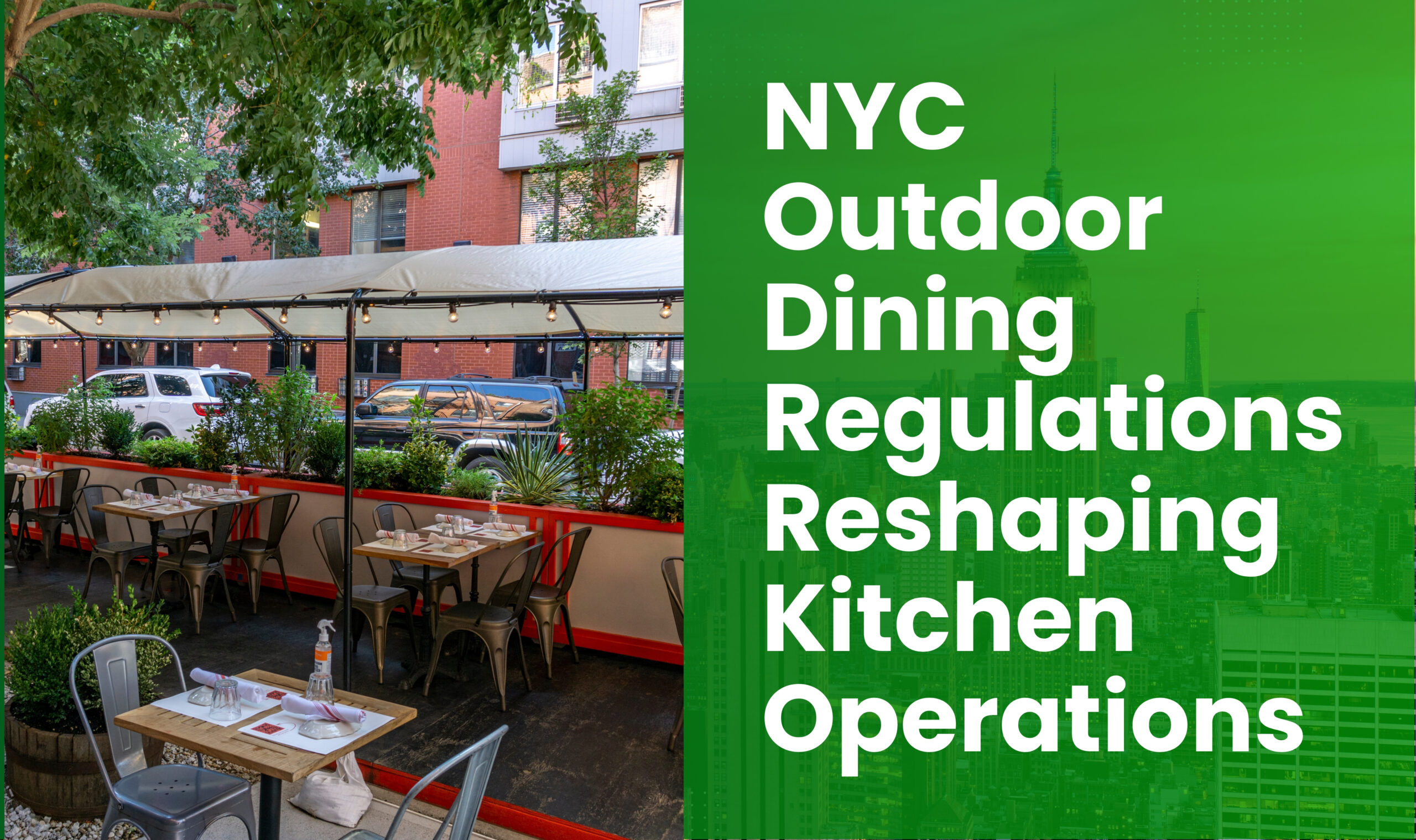
Outdoor Dining in NYC Just Got Complicated
Outdoor dining has officially reshaped the New York City restaurant scene. It happened first as a lifeline during the pandemic, and now it continues as a long-term extension of how the city eats. But with the passing of Local Law 121, the city has replaced the emergency Open Restaurants program with a permanent and regulated framework called Dining Out NYC. For restaurant owners, this this has moved beyond being a mere zoning issue, transforming into a regulatory and compliance matter that goes deep into foundational kitchen operations.
The new regulations come with strict guidelines on the types of structures that will be permitted, approved seasonal use and (of course) permitting fees. While these are the aspects that typically gain the most attention, what often gets missed is how these changes impact the long-standing physical systems that keep a restaurant running….and how these systems are expected to change when kitchens expand into streets and sidewalks.
The reality is, outdoor dining spaces will increase demand on restaurant exhaust systems. They alter airflow dynamics and (increasingly) often require temporary or duplicated cooking setups. This ultimately means more stress on exhaust hoods and more opportunities for grease buildup and added complexity for maintaining FDNY compliance. And that’s before factoring in waste handling and grease trap maintenance, which becomes even more difficult when outdoor stations are cobbled together without long-term planning.
If restaurant owners and managers want to stay compliant (and avoid fines) they’ll need to think beyond tables and chairs. They’ll need to build for performance, not just permits.
What Local Law 121 Means for Restaurants
Local Law 121 is a major regulatory overhaul for how New York City restaurants can use outdoor space moving forward. The law, passed by the City Council in 2023, sunsets the pandemic-era Open Restaurants program and introduces a more structured and enforceable framework under the banner of Dining Out NYC.
Under the new law, restaurants must apply for specific outdoor dining permits and follow strict design requirements. Structures are now limited in size, can only be used seasonally (April through November), and must be removable. Permits carry fees based on frontage and borough, with higher rates in Manhattan.
These new rules mean restaurateurs will need to consider not just aesthetics, but mechanical and operational logistics. A sidewalk café or curbside structure is now subject to building codes, Department of Transportation (DOT) enforcement, and public safety regulations. That includes how cooking equipment is placed, how restaurant exhaust systems are ventilated, and how fire suppression access is maintained.
For those who’ve expanded their kitchens outdoors -even partially- this creates new layers of scrutiny. Non-compliant setups can now trigger multiple violations, from the DOT to the FDNY to the Department of Buildings. And while the city is offering a grace period for existing structures, enforcement is set to seriously ramp-up heading into 2026.
Dining Out NYC: Full Program Guidelines City Council Summary: Local Law 121 of 2023
How Outdoor Kitchens Shift the Game
Ultimately, outdoor dining changes how kitchens function, and as a result, how vulnerable they become to regulatory issues. When kitchens are extended beyond their original footprint, whether by placing actual grills on the curb (which happens) or simply locating prep stations closer to the outdoor environment, the operational dynamics shift fast.
Temporary or semi-permanent setups often lack the ventilation, containment, and access that indoor kitchens take for granted. From a traditional kitchen perspective, exhaust hoods may be undersized. Fire suppression coverage can be partial or poorly routed. And when grease-laden vapors escape uncontrolled, it raises both fire risks and compliance flags, especially under FDNY regulations and NFPA 96 ventilation standards. What’s more, whenever regulations change and new laws are enacted, regulatory entities tend to come out in full-force.
Beyond fire safety, heat and airflow are major concerns. Outdoor stations often trap heat in enclosures or create negative pressure inside the main kitchen. Because doors often remain open, there are often strains on HVAC systems which pulls contaminants back into food prep zones. Restaurant managers may find themselves juggling inconsistent cook times, smoke drift complaints, or even staff issues resulting from heat and bad airflow.
Then there’s logistics. Outdoor kitchens introduce longer travel paths, which slows down service. They invite pest activity if trash and food waste aren’t tightly managed. And many setups rely on quick-fix equipment that’s hard to clean and prone to grease buildup. All of which triggers, again, another round of maintenance headaches.
Adapting to this new setup means treating outdoor kitchens with the same engineering, fire safety, and airflow considerations as the main line. That’s where retrofitting exhaust systems, rerouting fire suppression, and building out proper waste containment can turn a liability into an asset.
FDNY Outdoor Dining Safety Guidelines NFPA 96: Standard for Ventilation Control and Fire Protection of Commercial Cooking Operations
FDNY Compliance: Often Overlooked, Always Critical
Outdoor kitchens and sidewalk cafes might feel like simple extensions, but to the FDNY, they’re entirely new fire zones. That distinction matters. It means all the fire protection rules that apply indoors—including suppression systems, clearances, and access—are still in full effect outside.
The most common oversight? Fire suppression coverage. Many operators assume a single system will cover both indoor and outdoor cooking areas. It won’t. Every active cooking surface in a new zone needs proper protection, including hood-mounted fire suppression nozzles and manual pull stations within reach. Failure to meet these standards is a leading cause of FDNY compliance violations during inspections.
Clear egress paths and access to suppression controls are equally important. Outdoor structures that block fire department access or obstruct suppression pull stations are non-starters. The same goes for propane or portable fuel setups, which are either tightly restricted or outright banned, depending on the borough and fuel type.
Another issue is system maintenance. Temporary setups are often overlooked in regular service schedules. That means hoods go uncleaned, suppression tanks aren’t inspected, and critical nozzles become clogged or misaligned—all of which can lead to citations or, worse, fires.
The FDNY has released specific guidelines for safe outdoor cooking environments. But enforcement has been uneven. Some operators get away with violations for months—until they don’t. And when inspectors do show up, they typically find more than one infraction.
Being proactive with inspections and maintenance isn’t just about passing the next FDNY visit. It’s about protecting lives, property, and the future of the business.
FDNY: Safety Requirements for Outdoor Dining Structures (PDF) FDNY: Commercial Kitchen Fire Suppression Systems
Hidden Challenges: Grease Trap Maintenance in Outdoor Setups
When restaurants move cooking stations outdoors, grease management becomes a much bigger problem—and one that’s easy to overlook. Most outdoor kitchens aren’t built with plumbing infrastructure in mind. That means makeshift sinks, prep counters, or fry stations often drain improperly, or not at all.
Without dedicated drainage, food waste and grease find their way into storm drains, sidewalks, or temporary holding tanks. This creates health code violations and raises red flags for both the DEP and local health departments. It also invites pests, increases odor complaints, and makes daily operations messier than they need to be.
Even when drainage is handled correctly, grease trap maintenance becomes more complicated. Outdoor units are harder to access and more prone to temperature-related issues—grease thickens faster in colder months and solidifies in lines that aren’t insulated. That leads to backups, clogs, and emergency cleanouts that could’ve been avoided.
Add to that the fact that many outdoor setups rely on mobile or undersized grease traps, which fill quickly and aren’t serviced as part of the regular kitchen maintenance cycle. It’s not uncommon for outdoor traps to go weeks without inspection, only to overflow during peak service.
A proper grease containment strategy isn’t optional—it’s fundamental. Whether it’s connecting outdoor stations to an indoor system or installing larger, insulated traps built for exterior conditions, operators need to plan for year-round functionality.
NYC DEP: Fat, Oil, and Grease Management Guidelines
Optimizing Restaurant Exhaust Systems for Outdoor Use
Outdoor kitchens introduce new variables into airflow and ventilation—ones that most restaurant exhaust systems weren’t originally designed to handle. The result? Inconsistent capture, lingering odors, and a much higher risk of both fire and regulatory violations.
Open-air setups don’t insulate fumes the way indoor kitchens do. Smoke and grease-laden vapor drift freely, often into dining areas, neighboring storefronts, or directly into the path of pedestrians. That creates customer complaints and potential air quality infractions. And when airflow isn’t properly directed, oil mist accumulates on surfaces, forming invisible but dangerous fire hazards.
This is where system design matters. Adding outdoor cooking lines should never be a plug-and-play job. Hood sizing needs to be recalculated. Duct paths may need to be extended or redirected. Exhaust fans require load adjustments. And most setups benefit from odor-control technology like electrostatic precipitators or activated carbon filters—especially in high-density urban environments.
Another consideration is balance. Outdoor systems can create negative pressure inside the main kitchen if not calibrated correctly. That can disrupt temperature control, hinder equipment performance, and even pull unfiltered air back into prep areas. It’s a common oversight, and one that has simple but critical fixes if caught early.
Whether retrofitting existing systems or designing for new patio builds, working with ventilation specialists can ensure both airflow and safety requirements are met—without compromising performance.
NFPA 96: Ventilation Control and Fire Protection Standards NYC Department of Buildings: Kitchen Exhaust Guidelines
Staying Ahead of Inspections and Seasonal Pressure
Spring and summer bring more than warm weather—they bring city inspectors. Outdoor dining programs operate on a seasonal schedule, which means regulatory agencies time their enforcement cycles to coincide with peak months. For restaurants, that means the pressure isn’t just operational. It’s compliance-related too.
FDNY, DEP, and Department of Buildings inspections can happen without notice. And now that outdoor dining falls under a formal permit system, inspectors are actively checking structural compliance, waste containment, and fire safety across all zones—not just inside the building.
This is where routine servicing becomes essential. Regular cleaning of hoods, verification of fire suppression systems, and on-schedule grease trap maintenance are all frontline defenses against costly violations. When these systems are neglected, it shows fast. Overflowing traps, dirty exhaust vents, or non-functional suppression nozzles are the kind of issues that lead to citations, fines, or forced shutdowns.
The other seasonal reality is operational strain. Warm weather means more volume, longer hours, and expanded menus. All of that puts added load on mechanical systems—especially those extended outdoors. Kitchens that don’t prepare for this spike in demand often pay for it in repairs, lost service hours, or emergency cleanups.
Filta Kleen provides ongoing inspection-readiness support through regular maintenance, documentation, and system testing. That means no scrambling before an inspector shows up, and no surprise violations when they do.
NYC Health Department: Inspection Guide for Food Service Establishments FDNY Commercial Kitchen Maintenance Guidelines
Final Thoughts: Planning Now Avoids Fines Later
For good reason, outdoor dining has become a permanent part of New York City’s evolving restaurant landscape. That being said, permanence comes with rules and regulatory concerns that can unfortunately carry consequences. As Local Law 121 goes into full effect, restaurant owners and managers who treat outdoor kitchens with the same seriousness as their indoor lines will be the ones who thrive.
Grease, smoke, heat, and waste are issues that demand an evolving degree of concern. The key to avoiding fines and shutdowns starts with preventing them through smart planning and regular system care.
Whether it’s rerouting ductwork, upgrading fire suppression, or scheduling monthly grease trap service, the work that happens behind the scenes keeps things running without concern.
From exhaust and suppression system retrofits to waste oil recovery and violation removal, Filta Kleen helps kitchens stay open, compliant, and ready for whatever the next inspection brings.
NYC Dining Out Program Overview NFPA 96: Kitchen Ventilation Standards DEP Grease Management Guidelines
FAQs Related to NYC Outdoor Dining Regulations
What are NYC outdoor dining regulations under Local Law 121?
NYC’s Local Law 121 establishes permanent rules for outdoor dining. It replaces the temporary Open Restaurants program with seasonal permits, design standards, and specific compliance requirements enforced by the DOT, FDNY, and DOB.
Do NYC outdoor dining regulations affect kitchen equipment?
Yes. Outdoor kitchens must follow the same fire safety, ventilation, and waste management standards as indoor setups. This includes exhaust system design, fire suppression coverage, and grease trap maintenance.
Can I use propane or portable fuel outdoors under the new NYC rules?
Propane and other portable fuels are tightly regulated or banned in many NYC areas. Always consult FDNY rules and get approvals before using any fuel source in outdoor kitchens.
How do I avoid violations under NYC outdoor dining regulations?
Stay compliant by maintaining your hood and exhaust systems, ensuring fire suppression is properly installed outdoors, and servicing grease traps regularly. Partnering with companies like Filta Kleen can help prevent costly citations.
Are electrostatic precipitators required for outdoor dining areas?
While not mandated, electrostatic precipitators help manage odors and airborne grease, especially in high-traffic or residential areas. They can support compliance with DEP and air quality standards.
