What Questions to Ask Before Hiring a Grease Trap Cleaning Company
Running a successful restaurant or commercial kitchen in New York City means paying attention to the less glamorous side of the business – like the grease trap. In a bustling food scene, especially in areas like Brooklyn, grease traps quietly protect your plumbing and the city sewers every day. As Envirogreen, a professional grease trap cleaning company with over 50 years of NYC experience, we’ve seen it all. In this guide, we’ll explain what grease traps are, why regular cleaning is essential, how the cleaning process works, and how to choose the best grease trap cleaning company in NYC for your needs. Our tone is friendly and genuine, but backed by the authority of a long-established industry leader ready to help you keep your kitchen safe, compliant, and running smoothly.
What Is a Grease Trap and Why Does It Matter?
A grease trap (also known as a grease interceptor) is a plumbing device designed to catch fats, oils, and grease (often called FOG) from your kitchen wastewater before it enters the sewer system. Whenever you wash dishes or clean up cooking residue, greasy wastewater flows into the trap. Inside the grease trap, the water cools and grease floats to the top (because grease is lighter than water), while solids sink to the bottom. The device holds onto these fats and food solids, allowing only cleaner water to flow out to the sewer.
Grease traps are absolutely crucial for any restaurant, café, or food service establishment. Without them, all that cooking oil and food grease would solidify in your pipes or the city sewers, causing nasty clogs. In fact, the NYC Department of Environmental Protection (DEP) estimates that about 60% of the city’s sewer backups are caused by grease buildup. Over time, uncontrolled grease can even form massive, rock-like “fatbergs” that block pipes and cost millions to remove. This isn’t just a city problem – it can quickly become your restaurant’s problem if a backed-up sewer line causes sewage to overflow into your kitchen or street. Regular grease trap maintenance is not just a good practice – it’s the law. New York City requires all grease-generating businesses (like restaurants, cafeterias, and commercial kitchens) to have properly installed and maintained grease interceptors.
These traps must be kept in good working order to prevent grease from entering the sewer. If a grease trap is too small or not functioning effectively, the DEP can issue violations and require you to fix the issue. Every grease interceptor should be cleaned frequently enough to avoid exceeding its capacity – in other words, don’t let it get so full of grease that it stops doing its job. Many NYC restaurants find that monthly cleanings are a minimum, with high-volume establishments needing more frequent service. The goal is to always keep the trap effective at separating grease and to prevent any overflow of FOG into your plumbing.
Why Regular Grease Trap Cleaning Is Essential
Cleaning a grease trap regularly is an essential part of kitchen maintenance for several important reasons: Preventing Clogs and Overflows: As grease accumulates in the trap, it eventually reaches capacity. If not cleaned in time, new grease and food waste have nowhere to go but into your pipes. This can lead to slow drainage, foul odors, and eventually a complete blockage or overflow. A clogged grease trap or grease-choked drain can bring a busy kitchen to a standstill, resulting in sudden downtime and expensive emergency plumbing calls. Imagine your sinks backing up on a busy Friday night – that’s a very real risk if the trap is neglected.
Regular cleaning keeps everything flowing smoothly so you can focus on serving customers. Health and Sanitation: An overflowing or backed-up grease trap isn’t just an inconvenience; it’s a health hazard. Grease and sewage backups can create unsanitary conditions, foul smells, and even attract pests. Health inspectors in NYC pay close attention to grease management. A sudden grease trap overflow could cause you to fail a health inspection, or even force a temporary closure until the issue is resolved. Consistent cleaning helps you avoid these nightmares and maintain a clean, safe kitchen environment. Avoiding Costly Repairs: Grease trap neglect doesn’t only affect your restaurant – it can impact the entire neighborhood.
Grease that sneaks past a full trap will harden in your plumbing or the public sewer, potentially causing sewer line clogs that are difficult and costly to fix. If your establishment is found to be the source of a sewer backup, you could be held responsible for the damages and cleanup costs. It’s much cheaper to invest in routine cleaning than to pay for a major plumbing repair or flood cleanup down the line. Environmental Responsibility: Proper grease trap maintenance is also about being a good neighbor and citizen.
Overflowing grease can send oily wastewater into local waterways, harming aquatic life and the ecosystem. In one case, congealed grease and debris were blamed for up to 90% of sewer backups, forcing NYC to spend about $19 million in a year to clear the gunk. When you keep your grease trap clean, you’re doing your part to prevent pollution and infrastructure problems. Even better, the collected grease can often be recycled into biofuel – every gallon of used cooking oil reclaimed is a gallon that might become biodiesel to power vehicles instead of becoming sewer sludge.
Regular cleaning with a responsible company ensures your waste is handled in an eco-friendly way. Legal Compliance and Avoiding Fines: Perhaps one of the most compelling reasons to stay on top of grease trap cleaning is to avoid penalties. NYC authorities are serious about grease trap compliance. Noncompliance with grease regulations can lead to fines as high as $10,000 per day, per violation. The DEP routinely sends inspectors to restaurants to check that grease interceptors are the right size, properly installed, and maintained.
If an inspector finds an overflowing trap or no evidence of recent cleaning, you could receive a hefty fine or even an order to cease operations until the issue is fixed. Regular cleaning by a professional service keeps you in compliance and provides documentation (like service logs or manifests) to prove it. It’s truly a case of “an ounce of prevention is worth a pound of cure” – spending a little on preventive maintenance saves you from huge penalties and headaches.
How Grease Traps Are Cleaned (Step by Step)
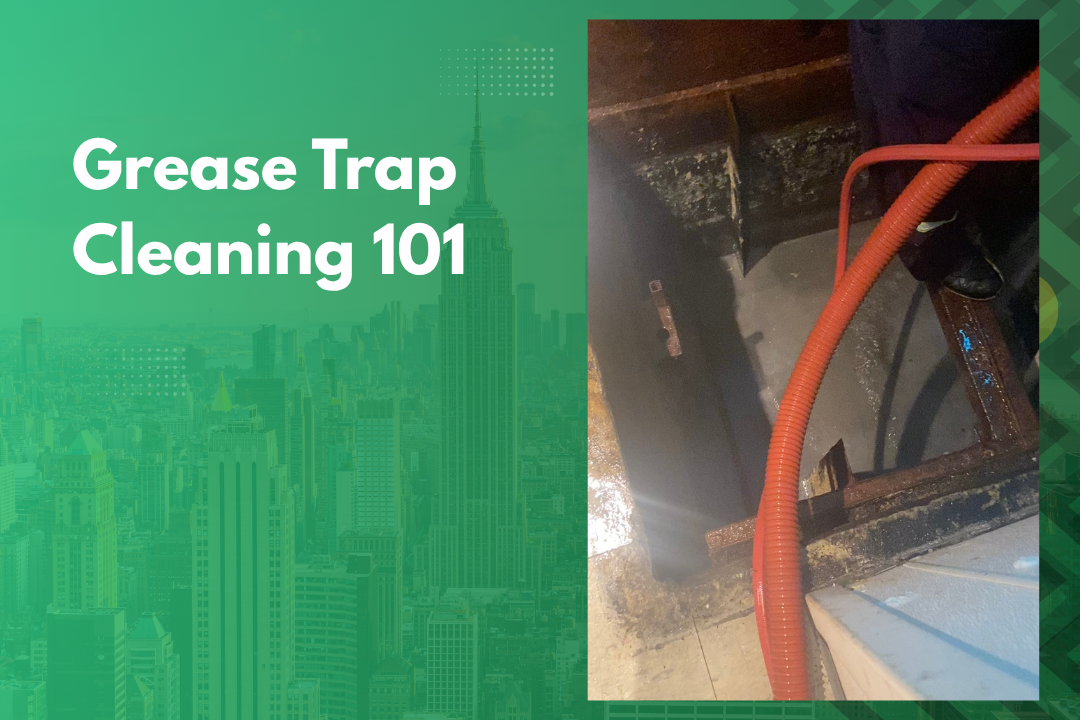
Cleaning a grease trap is a dirty job best left to professionals. At Envirogreen, our trained technicians follow a thorough process to ensure your grease trap is completely cleaned and functional after each service. Here’s an overview of how grease traps are cleaned:
•Preparation and Safety: Before starting, the technician will locate the grease trap (they can be under sinks or in the floor, depending on the setup) and make sure the area is accessible. They may ask that kitchen staff temporarily stop using sinks or dishwashers so grease-laden water isn’t flowing during the service. The area is prepped to avoid any spills, and the technician will be in proper protective gear. Removing the Lid: Using the appropriate tools (a pry bar, wrench, or screwdriver), the technician carefully removes the grease trap lid. Caution is taken because built-up gases inside the trap can produce a strong odor when opened. Once the lid is off, you can usually see a mat of hardened grease floating on top of water inside the trap.
•Measuring and Inspecting (Optional): In some cases, the technician might measure the thickness of the grease layer and the volume of solids. This helps assess how full the trap is and whether cleaning frequency should be adjusted. They will also inspect the trap’s baffles and overall condition to make sure everything is intact. (Any notable issues will be reported to you, since a damaged trap might need repair by a licensed plumber.)
•Pump Out the Contents: Next comes the heavy lifting – or rather, pumping. The technician will use a vacuum pump or hose to remove all the contents of the grease trap, including the accumulated grease on top, the solid food waste settled at the bottom, and the wastewater in between. Typically, a hose is connected to a pump truck or a portable pumping unit, which sucks out the grease and liquid into a holding tank. This step removes the bulk of the waste from the interceptor. A professional service will ensure all grease, food solids, and water are completely pumped out, leaving the trap empty.
•Scrape and Clean the Trap Interior: After pumping, a significant amount of residue will still be stuck to the walls and baffles of the trap. Technicians will use tools like scrapers or putty knives to scrape off every bit of hardened grease and sludge from the sides, bottom, and metal components of the trap. This step is crucial – it’s where a superior cleaning differs from a quick pump-and-go. If any residue is left, it can accelerate future build-up. Our Envirogreen team takes the time to scrape it all out. Some traps, especially larger outdoor ones, may also be pressure washed or rinsed with hot water to blast away stubborn deposits. This thorough cleaning ensures the trap is as close to new as possible internally, with no old grease left to cause odors or clogs.
•Inspect and Flush: With the trap cleaned out, the technician may flush the trap with clean water to ensure the flow is clear and to check that the outgoing line to the sewer is not obstructed. We’ll also check that the inlet and outlet pipes, as well as any flow control device, are in good shape. If we notice any issues (like a broken baffle or a clog in the outgoing line), we’ll let you know so it can be addressed promptly. Proper
•Disposal of Grease Waste: All the grease and wastewater that was pumped out is contained in our service truck’s tank. Here’s where doing things the right way matters. A reputable grease trap cleaning company will never dump this waste down a storm drain or in the trash – that would be illegal and environmentally harmful. Instead, we transport it to an approved processing facility. In NYC, grease trap waste must be handled by a licensed waste disposal service in compliance with city regulations. Envirogreen is fully licensed and certified to haul and dispose of this “brown grease” waste safely. Often, the collected grease can be processed and recycled (for example, turned into biofuel), which aligns with our eco-friendly mission.
•Seal the Trap and Cleanup: After disposal, the technician securely places the lid back on the grease trap, making sure any bolts or latches are tightened. We then tidy up the work area, ensuring no spills or mess are left behind. You’ll probably notice immediately that the trap area is cleaner and any previous odors are greatly reduced or gone.
•Documentation and Scheduling: The final step is documentation. Envirogreen provides a service report or manifest for each grease trap cleaning. This includes details like the date and time of service, volume of grease removed, and the technician’s notes. Keeping detailed records of all grease trap cleanings is essential for you as a business owner, since it shows you’re following regulations and helps during inspections. We’ll maintain our own records and can provide proof of service or disposal upon request. Before leaving, we’ll also remind you of the recommended next service date (many NYC restaurants stick to a 30-day or 90-day schedule, depending on usage).
We’re happy to set up a regular maintenance schedule so you never have to worry about forgetting a cleaning – we can send reminders or auto-schedule your service at convenient times (even overnight, if needed, to avoid disrupting your business). By following these steps every time, Envirogreen ensures that your grease trap is completely cleaned and functioning optimally. A thorough cleaning not only keeps you compliant but also extends the life of your equipment and prevents emergency calls. It’s a messy job, but we take pride in doing it right so you can focus on running your kitchen.
Risks of Neglecting Grease Trap Maintenance
We’ve touched on some risks already, but it’s worth emphasizing what can happen if grease trap maintenance falls by the wayside. Neglecting your grease trap can lead to serious consequences for your business:
•Severe Plumbing Problems: Without regular cleaning, a grease trap will eventually become jam-packed with FOG and food solids. The trap’s ability to separate grease diminishes, and soon grease starts flowing out with the wastewater. This can cause blockages in your kitchen pipes and the building’s sewer line, resulting in slow drains, sewage backups, or even burst pipes. One local plumber described pulling a five-pound blob of grease out of a clogged line – and that was just from one restaurant’s pipe. When pipes are constricted by grease (sometimes leaving only a tiny opening for water to pass), you risk a sudden backup of foul water into your sinks, floor drains, or even out on the street. Such backups aren’t just disgusting; they can force you to halt operations and call in emergency plumbers. The wider community can suffer too – if your clog contributes to a neighborhood sewer backup, it might flood basements or streets nearby. In short, an ignored grease trap can snowball into a major plumbing disaster.
•Health Code Violations and Closures: The New York City Health Department and DEP both have regulations related to grease traps. During health inspections, officials often check for grease trap maintenance (they might ask for documentation or notice if there’s a foul odor or backup). One of the most common New York City restaurant violations is related to conditions that could attract vermin – and a smelly, overflowing grease trap can certainly do that. If inspectors determine your grease trap is not maintained (for example, grease overflowing into a sink or floor drain), they can issue violations or even order a cessation of operation until it’s fixed. Think about the lost revenue and reputational damage of having to close your doors on a busy weekend because of a preventable grease issue. It’s not worth the risk.
•Fines and Legal Liability: As mentioned, DEP inspectors make unannounced visits to ensure restaurants have a working grease interceptor and evidence of proper maintenance. If you can’t demonstrate that you’ve been cleaning your trap (with logs or invoices) or if the trap is clearly overdue for service, you may face fines. These fines can be steep – up to $10,000 per day for serious violations, especially if a grease discharge from your business causes environmental harm. Additionally, if your negligence leads to a public sewer blockage or overflow that damages city property or other businesses, you might be on the hook for cleanup costs or lawsuits. It’s happened before where businesses had to pay for catastrophic grease-related damages. This is truly a scenario of “pay a little now or pay a lot later.” Routine cleaning fees are tiny compared to even a single fine or legal claim.
•Environmental Damage: New York City has invested heavily in combating grease in the sewer system, but it needs the cooperation of food businesses. When grease traps are neglected, grease ends up in the sewer and can find its way into waterways, contributing to pollution. City officials note that in some neighborhoods with heavy restaurant presence, the risk of a 10-ton “fatberg” forming in the sewers is a real concern. Such a mass can cause sewage to overflow and potentially contaminate local water bodies or soil. Businesses that improperly dispose of grease (whether by neglect or deliberate dumping) are not only breaking the law but also harming the environment that we all share. New York lawmakers have even pushed for laws to track how restaurants dispose of grease and to penalize illegal grease dumping (with fines around $1,000 for those caught dumping oil into sewers or drains).
The bottom line: avoiding grease maintenance isn’t just a private matter – it has public consequences, and regulators are watching.
Damage to Reputation: In the age of social media and online reviews, a single incident can tarnish your restaurant’s reputation. If word gets out (or worse, photos) that your establishment had a rancid smell or a grease spill, it could turn away customers. Patrons expect restaurants to be clean and up to code behind the scenes. Being known for a grease trap mishap is not the kind of publicity any business wants. By contrast, staying on top of grease trap cleaning is part of running a professional operation. It’s one of those invisible things that, when managed well, nobody notices – and that’s what you want. In summary, the risks of neglect far outweigh the cost or effort of regular grease trap cleaning. It’s a critical maintenance task that protects your business’s physical infrastructure, financial health, and reputation.
Choosing a Grease Trap Cleaning Company in NYC: What to Look For
In New York City, you’ll find everything from one-man operations with a pump truck to larger environmental service companies. Choosing the right partner is important – you need a company that will do the job properly, keep you in compliance with NYC DEP regulations, and be there when you need them (especially in an emergency). Here are some key factors to consider when hiring a grease trap cleaning company in NYC:
•Certified DEP Compliance & Licensing: Always verify that the company is properly licensed to handle and transport grease waste. In NYC, grease trap waste is classified as trade waste, and haulers must be licensed by the Business Integrity Commission (BIC) or be on the city’s approved list. A legitimate grease trap cleaner will happily provide their BIC license number or proof of DEP compliance.
This matters because licensed companies follow disposal laws – they will take your grease to authorized processing facilities rather than dumping it illegally. Working with a licensed and insured company also protects you from liability. If an unlicensed hauler illegally dumps your grease and it’s traced back to your establishment, you could face fines too! So, ask for credentials. Ensure the company is licensed, insured, and knowledgeable about NYC’s grease disposal regulations. Envirogreen, for instance, is fully licensed by NYC authorities to perform grease trap cleaning and waste transport – giving you peace of mind that your service will meet all legal requirements.
•Experience and Expertise: Look for a company with a solid track record and specific experience in grease trap cleaning (not just general plumbing or waste hauling). Grease traps have their own quirks, and an experienced team will know how to handle different types (small indoor traps, large outdoor interceptors, automatic recovery units, etc.).
Envirogreen prides itself on over 50 years of experience serving NYC restaurants and facilities – that means we’ve encountered every possible scenario. An experienced provider will also be familiar with local regulations, common problems in NYC’s older buildings, and best practices to prevent issues. A company that has survived and thrived for decades likely has a good reputation for a reason. Don’t be shy about asking for references or checking reviews. As one industry article advised, choose a company that knows the local regulations and has a good reputation. In practice, that often means a business with many years in operation and satisfied long-term clients.
•Proper Cleaning Procedures: You want a service that does more than just pump out the trap and leave. Unfortunately, some companies (often the cheapest quotes) might “pump and run,” removing the liquid but not fully scraping or cleaning the trap. Make sure the company you hire details their cleaning process. Do they scrape the walls and baffles? Do they flush the trap? Will they show you the empty trap to confirm it’s clean? A transparent, professional company will have a standard operating procedure and will happily explain it.
At Envirogreen, for example, we include full interior scraping and a rinse in every service, and we can provide before-and-after photos if requested. This thoroughness prevents problems down the line. Also, ask if they dispose of the waste properly and provide documentation. Reputable companies will give you a service report or manifest, which is useful for your records (and something inspectors love to see).
•Transparent Pricing: Cost always matters, but be careful of rates that seem too good to be true. When comparing quotes, ensure you understand what’s included. Some less-reputable operators might quote a low price but then upcharge for “extra” gallons pumped, after-hours service, or disposal fees. Look for a company that offers clear, upfront pricing with no hidden fees. Flat-rate pricing for typical trap sizes is common. If your trap is especially large, they should tell you how they charge (e.g., per gallon or per hour). Transparent pricing is part of being a trustworthy service provider.
Envirogreen believes in fair, honest pricing – we’d rather win your loyalty than surprise you with an inflated invoice. When you call us, we’ll ask about your trap size/volume and give an estimate you can count on. A quality company will also value your time and schedule, performing the service efficiently without unnecessary delays or charges.
•24/7 Availability and Reliability: Grease-related emergencies don’t always happen 9 to 5. If your grease trap backs up on a Saturday night, you need help fast. That’s why it’s wise to choose a company that offers 24/7 emergency service or at least has on-call technicians for off-hours.
Envirogreen, for instance, provides 24/7 emergency response – so if you have a crisis at 2 AM, we’ll be there to fix it. Beyond emergencies, consider the company’s general reliability. Do they show up on time for scheduled appointments? Are they responsive if you call with questions or need to adjust a schedule? In the restaurant business, timing is everything – you want a service partner who respects that. Also, look for flexibility: can they service your trap during off-hours (early morning or late night) to avoid disrupting your operations? Our team often schedules cleanings in the early morning before a restaurant opens, for example. Choose a company that works on your schedule, not the other way around.
•Knowledge of NYC DEP Regulations: New York City’s grease trap rules (from DEP and the Department of Health) can be detailed. The company you hire should be well-versed in local requirements – for example, they should know that food establishments are required to have grease interceptors and that traps should be cleaned at least every 30 days or as frequently as needed. They should also be aware of the proper way to document cleaning (some businesses keep a log sheet on site). A great service provider will help you stay compliant by reminding you of cleanings and perhaps giving tips on maintenance (like not pouring boiling water or solvents into the trap, which can damage it or push grease through). Essentially, they should act as your partner in compliance.
At Envirogreen, we stay up to date on all city and state regulations. We even assist clients in preparing for DEP inspections by ensuring their traps are in top shape and paperwork is in order.
•Environmental Commitment: Since grease trap maintenance has environmental implications, consider a company’s eco-friendly practices. Are they just hauling grease to a landfill, or are they working with recycling facilities to turn waste oil into renewable energy? Companies that emphasize sustainability show that they care about the bigger picture (fitting for a company named Envirogreen!). Our approach has always been “green” – we seek to minimize the environmental impact by properly disposing of grease and partnering with facilities that can recycle used cooking oil and grease. By hiring an eco-conscious service, you’re indirectly supporting a cleaner environment while keeping your own operations compliant. It’s a win-win.
By evaluating potential grease trap cleaning companies with these factors in mind, you’ll be able to find a reliable partner who will keep your kitchen safe and legal. Many restaurant owners and facility managers in NYC ultimately stick with a trusted provider for years – a good service relationship means you have one less thing to worry about. When your grease trap is being handled by pros, you can focus on delighting your customers and running your business.
Beware of Unlicensed or Cut-Rate Competitors
We would be remiss not to caution you about the darker side of the grease trap service industry. In NYC, as in any big city, there are unfortunately some operators who cut corners, aren’t properly licensed, or offer unrealistically low prices by doing subpar work. Here are a few red flags and issues to be aware of:
•Illegal Dumping of Grease: The most egregious offenders will take the waste from your trap and illegally dump it – perhaps down a manhole, into a sewer grate, or in some remote area – to avoid paying disposal fees. This is not only illegal (with potential criminal charges and fines) but could come back to haunt your business. If investigators trace dumped grease or an environmental incident back to the source, the trail could lead to your restaurant’s trap. You might then face fines or liability even though it was the hauler’s wrongdoing.
To avoid this nightmare, always use a licensed company (licensed haulers have approved disposal methods and are periodically audited). Also, ask where they take the grease – a reputable firm will mention a treatment plant or recycling center. If someone is vague about disposal or refuses to provide documentation, that’s a red flag. Remember, cheap upfront cost can carry a heavy hidden price if it involves illegal dumping.
•Incomplete Cleaning – Just Pumping the Liquids: As mentioned earlier, some low-cost providers might only suck out the liquid contents of the trap and not thoroughly scrape or clean the sides. This means a lot of grease and sludge remains stuck in your trap, reducing its capacity and effectiveness. You’ll end up needing service again much sooner, negating any money you thought you saved.
Worse, the buildup left behind can break loose and still cause clogs. Always ensure that any quote you get includes a full cleaning. If the technician is in and out in 10 minutes for a job that usually takes 30-45 minutes, you probably didn’t get a proper cleaning. Envirogreen technicians take the time needed for each job – we don’t rush just to maximize the number of stops per day. Our priority is doing the job right.
•Unlicensed “Side Job” Operators: You might encounter individuals (maybe a local “handyman” or even an employee of yours moonlighting) who offer to clean your grease trap on the side for cash. Aside from issues of thoroughness, consider the legal implications: if they aren’t licensed to haul the waste, they have no legal place to take it. It’s not like you can throw grease trap waste in the regular trash or dump it down a household drain – it must go to specific processing sites. So where will that person put your grease? Likely somewhere improper. Additionally, if they get injured on your premises or cause a spill, you could face complications since they’re not an insured vendor. It’s just not worth the risk. Always hire professionals who do this as their business, not as a side gig.
•Fly-by-Night Companies: Be wary of companies with no track record, no official business address, or a history of changing names. They might offer a very low first-time price to win your business, then disappear when an issue arises. Or they might not be around in a year when you need them again. Stick to established companies or those that can demonstrate reliability (for instance, many years in business, real customer testimonials, etc.).
•Lack of DEP Familiarity: Some general plumbing or waste companies might offer grease trap cleaning but aren’t specialists. They may not be up to date on NYC’s DEP rules or proper procedures. For example, they might not know that food waste grinders (garbage disposals) are banned in commercial kitchens in NYC because they conflict with grease interceptor use. A knowledgeable grease trap company will ensure your setup is compliant in all aspects. An inexperienced one could overlook critical issues. The stakes are high, so you want someone who knows the ropes.
In short, choosing the cheapest or an unverified option can backfire badly. We have had clients come to Envirogreen after learning this the hard way – for instance, paying for a bargain cleaning that didn’t actually solve their problem, or facing violations because their previous service provider didn’t follow regulations. We take pride in being the kind of company that gets it right the first time. If you’re ever unsure about a competitor’s offer or advice, feel free to give us a call – we’re happy to share our knowledge so you can make an informed decision.
The Envirogreen Difference: Eco-Friendly, Certified, and Always On Call
With so many responsibilities on a restaurant owner or manager’s plate, grease traps might not be the most exciting topic – but for Envirogreen, it’s our passion and expertise. We want to wrap up by highlighting what sets Envirogreen apart and why many consider us NYC’s premier grease trap cleaning service.
•Over 50 Years of Experience in NYC: Envirogreen isn’t a newcomer or a faceless national chain. We’re a local NYC company (based in Brooklyn) that has been serving the five boroughs for decades. Over 50 years in business means we’ve built long-term relationships with clients who trust us with their routine maintenance and emergency needs. We know NYC’s neighborhoods, the quirks of its infrastructure, and the regulations inside and out. Our longevity speaks to our reliability – we’ve stood the test of time by consistently delivering quality service. When you work with us, you’re getting seasoned professionals who have literally seen every grease trap problem and know how to fix it or prevent it.
•Certified DEP Compliance and Licensing: Envirogreen is fully licensed by the relevant NYC authorities to perform grease trap cleaning and waste transport. We maintain our approvals with the New York City Business Integrity Commission, meaning we’re an officially approved trade waste removal company in good standing. For our customers, this is a big deal – it means you can trust that your waste is being handled lawfully and responsibly. We also stay current with any changes in city regulations, so we can ensure your establishment remains compliant. For example, if the DEP updates a rule about record-keeping or cleaning frequency, we’ll inform you and adjust our service if needed. We consider ourselves partners in your compliance. As proof of our service, we provide the documentation you need (work orders, manifests, etc.), which you can file on-site to show inspectors. With Envirogreen, you’ll never have to worry about DEP fines due to grease trap issues – we make compliance hassle-free.
•Eco-Friendly Practices: Protecting the environment is part of our core mission (it’s in our name!). Unlike some companies that just haul waste to the nearest dump, we take extra steps to minimize environmental impact. All grease and oily wastewater we collect is transported to certified processing facilities. Whenever possible, the waste is processed for recycling – for instance, separating water for treatment and sending waste oils to be converted into biodiesel or other products. We love the fact that used cooking oil from NYC kitchens can be turned into biofuel that helps power vehicles, reducing greenhouse emissions. By choosing Envirogreen, you’re not only safeguarding your plumbing but also contributing to sustainability. We also use efficient routing and scheduling to reduce fuel usage in our trucks, and our cleaning methods avoid the use of harsh chemicals that could harm the environment. It’s all about running a responsible business that cares about our community’s future.
•24/7 Emergency Service and Support: We know that emergencies don’t wait for convenient times. That’s why Envirogreen offers round-the-clock emergency service for grease trap issues. If you have a backup, overflow, or any urgent grease-related problem, we have a team on call to respond quickly – day or night, weekends and holidays. When you call us at 3 AM, you’ll reach a real person who can dispatch help immediately. Our emergency response units are equipped to pump out flooded traps, clear grease-clogged lines, and get your operation back to normal as fast as possible. Many of our clients keep our number handy for peace of mind, knowing we’re just a phone call away in a crisis. Additionally, even for non-emergencies, we strive to be extremely responsive. Need a last-minute service before a big inspection or event? We’ll do our best to accommodate you. Our customer service is friendly and knowledgeable – whether you have a question about scheduling, billing, or grease trap best practices, we’re here to help.
•Professionalism and Honesty: As a family-owned business (now spanning generations), Envirogreen has built its reputation on trust. Our technicians are punctual, courteous, and respectful of your establishment. We know we’re often working in the back of a kitchen or near customer areas, so we maintain a low profile and clean working habits. When we finish a job, we make sure everything is cleaned up and the only thing we leave behind is a spotless grease trap. Honesty is another pillar of our service. If we find that your trap is in good shape and you could extend the cleaning interval, we’ll tell you – we don’t upsell unnecessary service. Conversely, if we discover a potential issue (like a deteriorating trap or a grease vent in need of cleaning), we’ll advise you on the next steps, even if it’s something we don’t directly provide, because it’s the right thing to do. Our goal is to be your trusted partner in all things grease management, not just a vendor.
•Comprehensive Services – Beyond Just Grease Traps: While grease trap cleaning is our specialty, Envirogreen offers complementary services that many restaurants and facilities find useful. This includes used cooking oil collection (we can pick up your old fryer oil for recycling so you don’t have to deal with storing and disposing of it) and possibly kitchen hood cleaning referrals or minor drain line jetting if grease has clogged downstream pipes. By covering the full spectrum – from the fryer to the trap to the disposal – we provide a convenient one-stop solution for your grease management needs. Fewer contractors to coordinate means more streamlined service for you. In a city as dynamic and challenging as New York, we understand that restaurant owners, property managers, and chefs have plenty to worry about without stressing over grease traps. That’s why Envirogreen is here to shoulder that burden for you. Our combination of experience, compliance, environmental care, and customer-first approach truly sets us apart from the pack. We don’t just claim to be the best grease trap cleaning company in NYC – we work hard every day to earn that title through reliable, high-quality service.
In Conclusion
Grease trap maintenance might not be the hottest topic in the culinary world, but it’s undeniably one of the most important for anyone running a commercial kitchen in NYC. By understanding what grease traps do and committing to regular cleaning, you protect your business from a host of problems – clogs, fines, floods, and more. The risks of neglecting your grease trap are far too great, and thankfully, entirely avoidable with proper care.
When it comes to that proper care, choosing the right partner makes all the difference. You want a company that not only cleans the trap, but also cares about your compliance, your business uptime, and the environment. In New York City (from Manhattan’s fine dining establishments to the bustling eateries of Brooklyn), Envirogreen has been that partner for countless clients over the past half-century. Our friendly, professional team is dedicated to keeping your kitchen running smoothly, 24/7, 365 days a year. If you’re a restaurant owner, general manager, or facility manager, we hope this guide has been informative and reassuring. Taking care of grease traps is a big responsibility, but you’re not alone in it.
Envirogreen is here to help, bringing genuine expertise and a neighborly approach to grease trap cleaning. Whether you need a routine maintenance schedule or an urgent rescue, we’ve got your back. Give us a call or reach out online to schedule your next grease trap service or to ask any questions. Let us put our 50+ years of experience to work for you, so you can focus on what you do best – delighting customers and running a successful business. With regular grease trap cleaning and a trusted partner by your side, you’ll keep the regulators happy, the drains clear, and your kitchen humming along for years to come. Here’s to a grease-free, worry-free operation! Stay compliant, stay safe, and remember: a clean grease trap is key to a clean (and thriving) kitchen.
Frequently Asked Questions About Grease Trap Cleaning in NYC
How often should a grease trap be cleaned?
Cleaning frequency depends on your kitchen’s volume and the size of your grease trap. Most New York City restaurants schedule cleanings every 30 days, but busy establishments—especially those that fry or grill frequently—may need service every 2 to 3 weeks. A good rule of thumb: if more than 25% of your trap’s capacity is filled with grease or solids, it’s time for cleaning. Envirogreen can help determine the right schedule for your operation.
What happens if I don’t clean my grease trap regularly?
Neglecting grease trap maintenance can lead to severe plumbing clogs, foul odors, and even health code violations. In NYC, it can also result in DEP fines of up to $10,000 per day if inspectors find that your trap is overflowing or improperly maintained. Beyond the financial risk, backups and overflows can shut down your kitchen and harm your reputation.
Who regulates grease trap cleaning in New York City?
Grease trap maintenance is regulated primarily by the NYC Department of Environmental Protection (DEP) and the Department of Health (DOH). Both agencies require food service establishments to have properly installed and regularly serviced grease interceptors. The DEP also mandates that grease waste be transported and disposed of by licensed trade waste haulers—like Envirogreen.
Can my kitchen staff clean the grease trap themselves?
Small under-sink traps can sometimes be maintained by staff, but larger or in-ground interceptors must be cleaned by a licensed professional. Proper cleaning requires vacuuming, scraping, and legal waste disposal. Untrained staff could miss buildup, cause damage, or violate city regulations. Professional service ensures complete cleaning and compliant disposal documentation.
How can I tell if my grease trap needs cleaning?
Common warning signs include slow-draining sinks, unpleasant odors, gurgling sounds, or grease residue around drains or floors. If you notice any of these, your trap is likely near capacity. Regular cleaning schedules prevent these issues from occurring in the first place.
What happens to the grease after it’s removed?
Envirogreen transports all collected grease and wastewater to approved processing facilities in full compliance with DEP regulations. Whenever possible, the waste is recycled into biofuel—helping reduce environmental impact and turning kitchen waste into renewable energy. We never dump or dispose of grease illegally.
Is grease trap cleaning required by law in NYC?
Yes. All commercial kitchens that generate grease are legally required to have and maintain grease traps or interceptors. Failure to comply can result in fines, violations, and potential business closure orders. Regular service keeps your establishment compliant and provides documentation for DEP or health inspections.
How long does a typical grease trap cleaning take?
For a standard indoor trap, cleaning usually takes 30 to 60 minutes. Larger outdoor interceptors can take longer depending on size and condition. Envirogreen’s technicians work efficiently and can schedule cleanings during off-hours or overnight to minimize disruption to your operations.
Why should I choose Envirogreen over other grease trap companies?
Envirogreen has over 50 years of experience serving New York City’s restaurants and commercial kitchens. We’re fully licensed, insured, and DEP-compliant, offering 24/7 emergency service and eco-friendly waste handling. Unlike “pump-and-go” companies, we provide complete scraping, cleaning, and documentation for every job. Our long-standing reputation is built on reliability, transparency, and environmental responsibility.
Does Envirogreen provide documentation for inspections?
Absolutely. After each service, we provide a detailed service report and manifest noting the date, volume removed, and technician details. These records demonstrate compliance during DEP or DOH inspections and help track your maintenance schedule over time.
Additional Resources
- FDNY – Fire Safety in Commercial Cooking Locations Official FDNY guidelines covering hood cleaning frequency, documentation, and approved cleaning methods. https://www.nyc.gov/assets/fdny/downloads/pdf/business/Support/fire-safety-in-commercial-cooking-locations-english.pdf
- NYC DEP – Disposing of Grease as a Business Outlines proper grease trap maintenance and waste handling practices to stay compliant with DEP standards. https://www.nyc.gov/site/dep/water/disposing-of-grease-as-a-business.page
- NFPA – Standard 96 Overview The national benchmark for ventilation control and fire protection in commercial kitchens. https://www.nfpa.org/codes-and-standards/nfpa-96-standard-development/96
