Commercial Kitchen Hood Cleaning: The Importance of Commercial Hood Cleaning
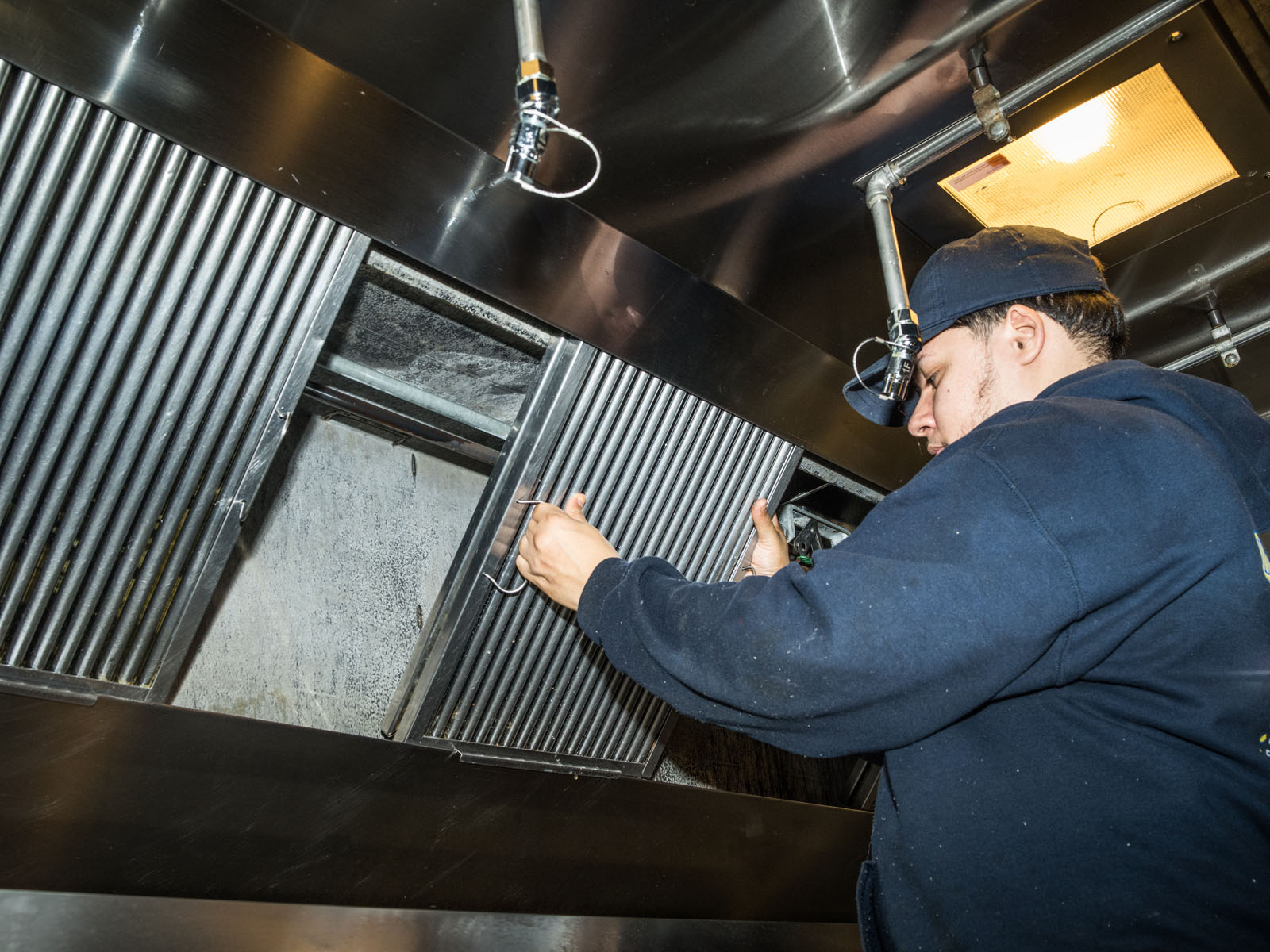
Regular hood cleaning services are integral to preventing grease buildup that can ignite and spread fire rapidly through your ductwork. According to NFPA 96, commercial kitchens must adhere to specific cleaning intervals depending on their cooking volume:
- Monthly for solid-fuel cooking operations (wood/charcoal)
- Quarterly for high-volume cooking (24-hour establishments or charbroiling)
- Semiannually for moderate-volume operations
- Annually for low-volume or seasonal facilities
Key Benefits of Regular Hood Cleaning:
- Fire Safety: Grease is highly flammable, and regular cleaning reduces the risk of a catastrophic fire.
- Compliance: Meeting NFPA 96 cleaning standards can help avoid fines or shutdowns.
- Improved Air Quality: Eliminating grease buildup keeps odors down and improves overall kitchen ventilation.
Commercial Kitchen Hood Installation: Starting Right
A proper commercial kitchen hood installation is crucial not only for code compliance but also for ensuring optimal ventilation and fire suppression. Systems that don’t meet NFPA 96 guidelines may fail inspections and put your kitchen at risk.
What a High-Quality Installation Involves:
- Correct Sizing: Hoods should match the cooking equipment footprint to capture all grease-laden vapors.
- UL Listed Filters: Filters must be UL Listed (or ETL) to comply with fire codes and efficiently trap grease.
- Appropriate Ductwork: Ducts need to be liquid tight with welded seams for safe and efficient exhaust.
- Proper Exhaust Fans: Hinged upblast fans equipped with hold-open retainers make maintenance easier and reduce fire hazards.
Popular Services:
- Restaurant hood installation
- Restaurant commercial hood installation
- Commercial kitchen hood installation
- Commercial kitchen hood cleaning
When these steps are followed, your hood system will meet the standards of NFPA 96, ensuring a safer cooking environment and easier compliance with local fire codes.
Restaurant Hood Repair & Commercial Hood Repair
Even the best hood system can experience wear and tear. Restaurant hood repair services address issues such as malfunctioning fans, damaged ductwork, or broken filters that compromise efficiency and safety.
Common Hood Repair Concerns:
- Fan Issues: A broken or noisy fan reduces ventilation effectiveness, allowing grease and heat to accumulate.
- Leaking Seams or Ducts: Duct leaks undermine airflow and increase fire risk by letting grease escape onto other surfaces.
- Filter Damage: If filters are damaged, clogged, or warped, they can’t capture grease efficiently.
Why Regular Hood Repair Matters:
- Compliance: Keeping everything functional ensures you remain in line with NFPA 96 requirements and local health codes.
- Extended Equipment Life: Proactive repairs keep your hood system running optimally and prevent costly replacements down the line.
- Energy Savings: A well-maintained hood uses less energy, resulting in lower utility costs.
Pollution Control Units (PCUs) in Modern Kitchens
PCUs are more than just an add-on for industrial facilities; they’re becoming standard in large or high-end restaurants aiming to reduce smoke, odors, and grease emissions. NFPA 86 and NFPA 96 both emphasize the importance of clean, safe exhaust:
- Particle Filtration: Captures grease, smoke, and other particulates before they reach the atmosphere or rooftop.
- Heat Management: High-heat cooking equipment often requires a specialized PCU that can handle elevated temperatures.
- Reduced Fire Risk: By filtering out flammable grease-laden vapors, PCUs minimize the potential for duct fires.
Additional NFPA Codes Relevant to Commercial Kitchens
While NFPA 96 is the primary standard for ventilation control and commercial kitchen hood cleaning services, other NFPA codes can apply under certain conditions:
- NFPA 17A: Covers wet chemical extinguishing systems, often required in commercial kitchen hoods.
- NFPA 211: Primarily addresses chimneys and solid-fuel appliances, which can be relevant if your operation includes wood-fired ovens.
To stay fully compliant, always confirm with your local Authority Having Jurisdiction (AHJ) which standards apply to your specific equipment and cooking methods.
Why Professional Services Matter
-
Some restaurant owners attempt DIY cleaning or hood repairs to cut costs. However, professional services come with distinct advantages:
- Expertise: Trained technicians know how to handle potential fire hazards effectively.
- Proper Tools & Cleaning Agents: Professionals use high-grade cleaning solvents, specialized scrapers, and steam-cleaning equipment to remove stubborn grease.
- Compliance Documentation: Many cities require proof of professional hood cleaning and system maintenance; reputable services provide these records.
How to Choose the Right Service Provider
When selecting a commercial kitchen hood cleaning, restaurant hood repair, or commercial hood installation company, keep these points in mind:
- Certifications & Insurance: Ensure they’re certified to handle commercial kitchen exhaust systems and carry liability insurance.
- NFPA 96 Familiarity: Verify they have in-depth knowledge of NFPA 96 and other relevant codes.
- Experience & Reputation: Look for customer testimonials and a proven track record in your region.
Ready to ensure your high-heat cooking and exhaust systems meet FDNY standards?
Contact Filta Kleen today for a customized compliance plan that supports the longevity of your equipment and the safety of your entire kitchen operation.
